What Does “Hyperfiksaatio” Mean?
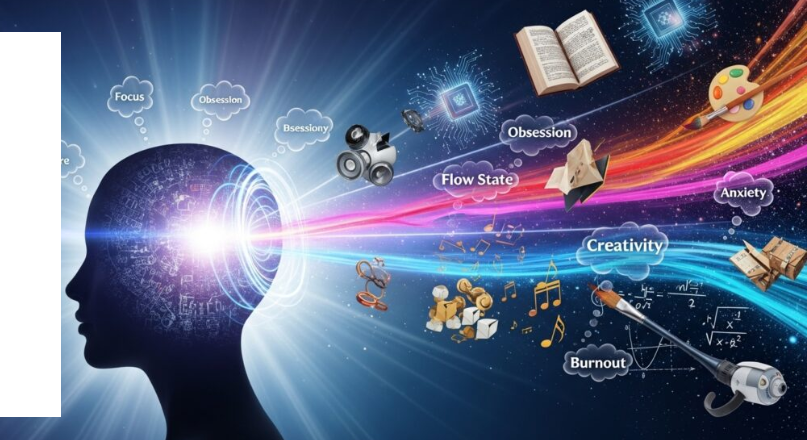
Hyperfiksaatio (from Finnish; in English, “hyperfixation”) refers to an intense mental focus on a specific activity, topic, or interest for an extended period of time. A person experiencing hyperfixation may become so absorbed that they lose track of time, ignore surroundings, and struggle to shift attention to other tasks. It is not officially classified as a disorder but is commonly discussed in psychology and mental health contexts.
Psychological Background
Hyperfixation is often linked to how the brain regulates attention, motivation, and reward. It is commonly associated with conditions like Attention Deficit Hyperactivity Disorder and Autism Spectrum Disorder, where individuals may experience fluctuations between distractibility and intense focus. Neurologically, it is thought to involve dopamine-driven reward pathways, making certain activities feel highly engaging or even irresistible.
How Hyperfixation Feels
During hyperfixation, a person may:
- Spend hours (or days) focused on one subject
- Forget to eat, sleep, or complete daily responsibilities
- Feel mentally “locked in” to the activity
- Experience frustration when interrupted
This state can feel both highly productive and difficult to control at the same time.
Benefits of Hyperfixation
Hyperfixation isn’t always negative—it can actually be very useful in certain situations:
- 🚀 Deep productivity: Allows intense concentration and high-quality work
- 🎯 Skill mastery: Helps individuals learn complex topics quickly
- 🎨 Creativity boost: Often linked to artistic and innovative breakthroughs
- 🧠 Problem-solving: Enables sustained focus on difficult challenges
Many successful people have used hyperfixation to achieve expertise in specific fields.
Risks and Downsides
However, hyperfixation can also create problems if not managed properly:
- ⏰ Time blindness: Losing track of time and missing deadlines
- 🍽️ Neglect of basic needs: Skipping meals or sleep
- 📉 Reduced balance: Ignoring other responsibilities or relationships
- 😓 Burnout: Mental exhaustion after prolonged focus
In extreme cases, it can interfere with daily functioning and well-being.
Hyperfixation vs Normal Focus
Normal focus is flexible—you can shift attention when needed. Hyperfixation, on the other hand, is rigid and immersive, making it difficult to disengage even when you want to. This is what separates it from healthy concentration.
How to Manage Hyperfixation
To benefit from hyperfixation without its downsides, people often use strategies like:
- ⏱️ Setting timers or alarms to take breaks
- 📅 Scheduling tasks to maintain balance
- 🧍 Practicing awareness of physical needs (food, sleep)
- 🔄 Using transitions to gently shift focus
These techniques help maintain control while still using the positive aspects of deep focus.
Conclusion
Hyperfixation is a powerful mental state that sits between productivity and imbalance. When understood and managed properly, it can be a tool for learning, creativity, and achievement. However, without awareness, it can lead to stress, neglect of responsibilities, and burnout. The key is learning how to channel the focus while staying balanced.