
The term Eo Pis does not correspond to a formally established academic theory, technical standard, or institutional framework. Instead, it represents what can be described as a flexible, adaptive conceptual label a term whose meaning is shaped by context, application, and interpretation.
In modern discourse, especially within digital, technological, and interdisciplinary environments, such flexible terms are increasingly common. Below is a structured, detailed explanation of how a concept like Eo Pis can function and why it holds relevance.
Nature of a Flexible Concept
A flexible concept has three defining characteristics:
Context-Dependent Meaning
Its definition changes depending on:
- The domain in which it is used
- The audience interpreting it
- The purpose it serves
Unlike rigid technical terminology (e.g., “blockchain” or “algorithm”), a flexible concept does not have a single authoritative definition.
Interpretive Openness
It allows multiple interpretations without being incorrect. This interpretive openness makes it adaptable across fields.
Evolution Over Time
Its meaning can evolve as industries, technologies, or cultural environments shift.
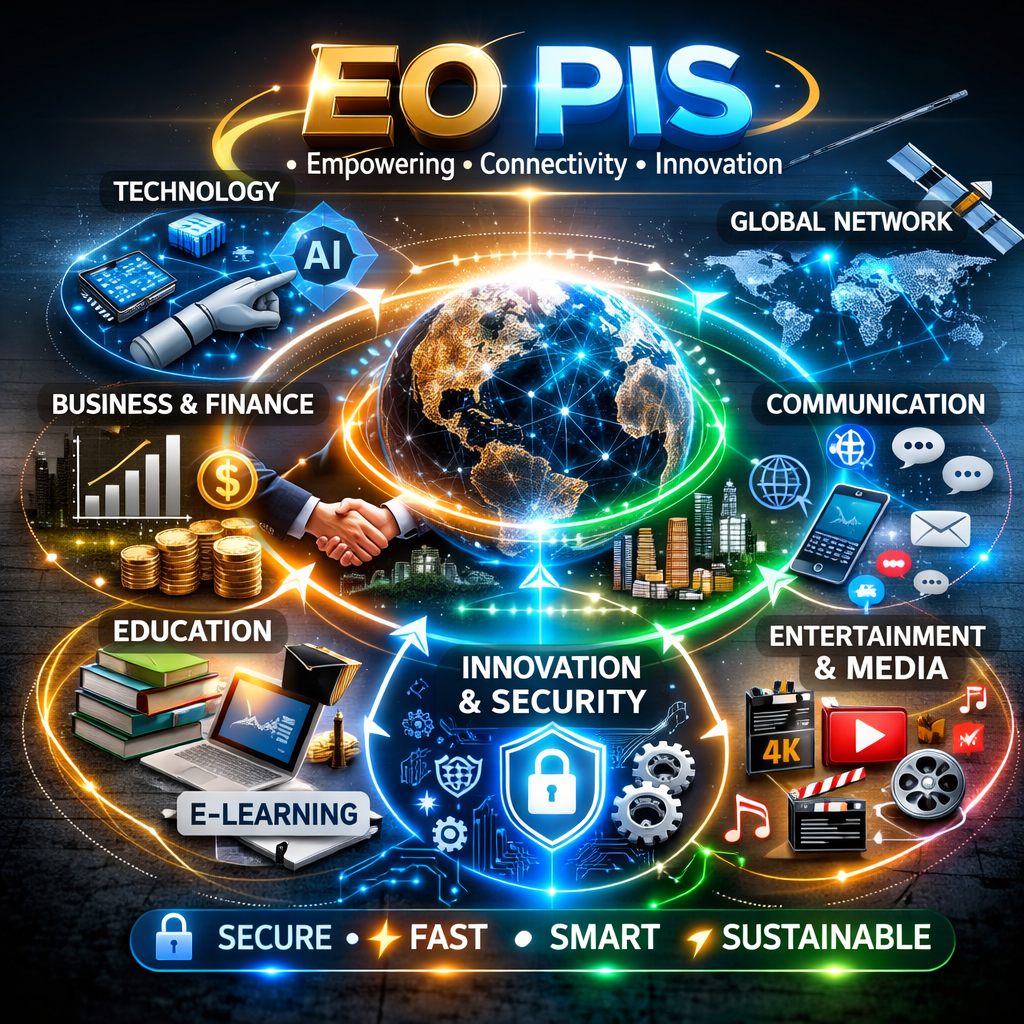
Structural Analysis of “Eo Pis”
From a structural standpoint, “Eo Pis” appears as:
A Possible Acronym
It may stand for a longer phrase. Many modern frameworks originate as abbreviations. For example:
- SaaS (Software as a Service)
- OSINT (Open Source Intelligence)
If Eo Pis is an acronym, its interpretation depends on the expansion chosen.
A Minimalist Construct
Short, abstract two-part names are frequently used in:
- Technology startups
- Digital platforms
- AI projects
- Creative industries
The abstraction allows global usability and brand scalability.
Conceptual Application in Modern Contexts
In Technology
Eo Pis could function as:
- A modular system model
- A framework describing interaction layers
- A digital transformation philosophy
Modern tech culture favors adaptable conceptual labels because systems evolve rapidly.
In Business Strategy
It may represent:
- A strategic methodology
- A dynamic operational model
- A hybrid innovation structure
Flexible terminology allows companies to pivot without abandoning their identity.
In Academic Discourse
Within research environments, flexible concepts are often used to:
- Describe interdisciplinary intersections
- Capture emerging phenomena not yet standardized
- Propose experimental theoretical models
Such concepts typically require formal definition sections to avoid ambiguity.
In Cultural or Digital Identity
In online communities, abstract terms become:
- Identity markers
- Movement names
- Digital philosophy labels
Ambiguity increases adaptability and audience interpretation.
Why Flexible Concepts Are Increasing in Modernity
Several structural shifts explain the rise of flexible terminology:
Rapid Technological Evolution
Fixed terminology becomes obsolete quickly. Flexible concepts allow continuity.
Interdisciplinary Blending
Modern problems intersect multiple fields. Rigid definitions limit cross-domain integration.
Globalization
Neutral, abstract naming reduces linguistic and cultural barriers.
Brand Strategy
Ambiguous names allow brand extension without redefinition.
Advantages of a Flexible Concept
Scalability
It can expand into new markets or intellectual territories.
Interpretive Inclusivity
Different stakeholders can adopt it without conflict.
Longevity
It avoids becoming obsolete due to narrow definition.
Limitations and Risks
Conceptual Ambiguity
Without structure, it can create confusion.
Weak Academic Authority
Undefined terms lack theoretical rigor.
SEO and Discoverability Issues
Ambiguous phrases struggle with search indexing unless clearly contextualized.
How to Operationalize “Eo Pis”
To transform Eo Pis from a vague phrase into a structured framework, three elements are required:
Formal Definition
Define it in one precise sentence.
Core Components
Break it into 3–5 pillars.
Application Model
Explain how it functions in real scenarios.
Example structural model:
Eo Pis could be defined as
“A dynamic framework for adaptive interaction between evolving systems and operational structures.”
Then break it into:
- Environment
- Operations
- Process Integration
- System Feedback
This gives it practical relevance.
Philosophical Interpretation
On a theoretical level, Eo Pis may represent:
- A post-structural concept
- A meta-framework
- A symbolic construct representing adaptability
Modern philosophy increasingly embraces fluid structures over rigid ontologies.
Strategic Insight
In contemporary discourse, the value of a concept is not only in its fixed definition but in its ability to:
- Absorb change
- Remain adaptable
- Support interdisciplinary thinking
- Sustain relevance across domains
Eo Pis, as a flexible conceptual structure, embodies this modern shift.
Conclusion
Eo Pis represents a non-fixed, adaptable conceptual label suited to modern environments characterized by technological acceleration, interdisciplinary convergence, and brand-driven abstraction.
Its strength lies in flexibility.
Its weakness lies in ambiguity.
Its value depends entirely on how it is defined, structured, and applied within a specific domain.